Search
Search
Remove Ads
Subscribe to Digest
Log in
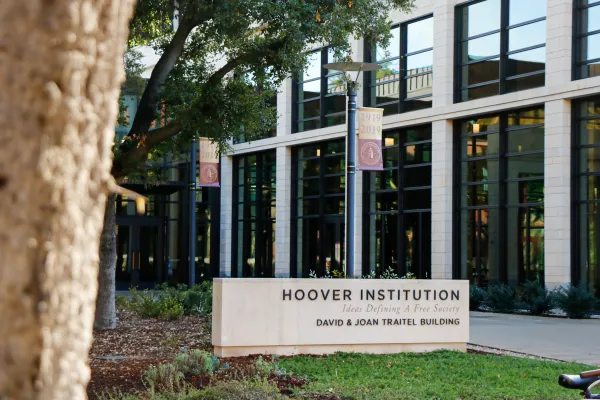
Hoover Institution
Arts & Life
What’s next for the Stanford bookstore?
Annabelle Chang
•
May 18
University
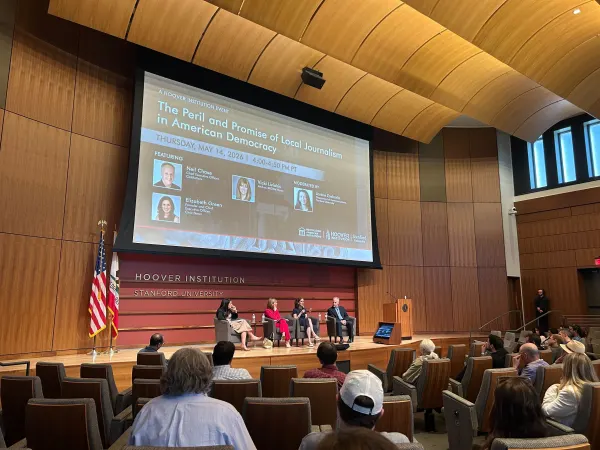
Journalism professionals call for media to evolve amid changing times
Alula Alderson
•
May 17
University
Kevin Warsh ’92 confirmed as next Federal Reserve chair
Naina Mehrotra
•
May 14
University
The Stanford affiliates shaping the Trump administration
Sofia Williams
and
Sterling Davies
•
May 11
Sports
Why are so many athletes transferring from Stanford?
Madisyn Cunningham
•
May 7
University
Trump nominates Hoover Fellow Kevin Warsh ’92 as next Federal Reserve chair
Daniel Xu
•
Feb. 4
University
People, Politics, and Places fellowship grants students a closer look at rural America
Rishi Upadhyay
•
Nov. 30
Campus Life
Florida Gov. Ron DeSantis visits campus, promotes conservatism
Sophie Nguyen
•
Oct. 24
University
US House Committee on Homeland Security urges cybersecurity action at Stanford hearing
Eva Wanek
•
May 29, 2025
University
Stanford leadership addresses federal actions at Academic Council marked by protest
Siddharth Bhatia
•
May 23, 2025
Opinions
Weis | Stanford has an identity crisis
Colin Weis
•
Feb. 27, 2025
University
Rishi Sunak, Akshata Murty to deliver 2025 GSB commencement address
Charlotte Burks
•
Feb. 19, 2025
University
Levin calls for strategic AI investments at Hoover Institution event
Sam Solomon
•
Jan. 22, 2025
University
Former U.K. prime minister Rishi Sunak MBA ’06 to join Hoover Institution as visiting fellow
Rani Chor
•
Jan. 22, 2025
News
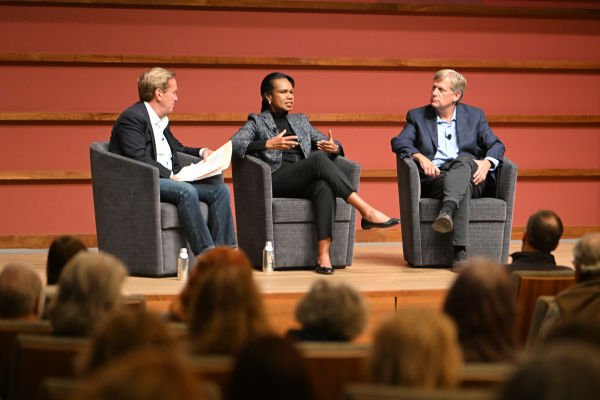
‘Institutions matter’: Condoleezza Rice and Michael McFaul condemn global assaults on democracy ahead of election
Sophia Browder
•
Oct. 30, 2024
Sports Features
Condi’s playbook: How Condoleezza Rice shaped Stanford athletics
Hayden Thompson
•
Sept. 22, 2024
Screen
Sean Penn reveals Ukraine’s ‘Superpower’ and calls for military aid
Rani Chor
•
Jan. 24, 2024
Speakers & Events
Rights and research: Hoover event explores treatment of Chinese American academics
Hana Dao
•
June 8, 2023
Editorial Board
Editorial Board | MTL is abusing the concept of Academic Freedom
Vol. 263 Editorial Board
•
May 29, 2023
From the Community
From the Community | Thought police or moral integrity?
From the Community
•
May 23, 2023
Previous
Page
1
Page
2
Page
3
…
Page
9
Next
Search
Search
News
Academics
Campus Life
Data
Equity Project
Graduate Students
Science & Technology
University
Sports
Fall Sports
Cross Country
Field Hockey
Football
Men’s Soccer
Men’s Water Polo
Women’s Soccer
Women’s Volleyball
Winter Sports
Fencing
Men’s Basketball
Men’s Gymnastics
Men’s Swimming & Diving
Squash
Women’s Basketball
Women’s Gymnastics
Women’s Swimming & Diving
Artistic Swimming
Wrestling
Spring Sports
Baseball
Beach Volleyball
Lacrosse
Men’s Golf
Men’s Rowing
Men’s Tennis
Men’s Volleyball
Sailing
Softball
Track & Field
Women’s Golf
Women’s Lightweight Rowing
Women’s Rowing
Women’s Tennis
Women’s Water Polo
Columnists
Features
Opinions
Columnists
Editorial Board
Letters to the Editor
Letters to the Community
Arts & Life
Culture
Music
Reads
Screen
Grind
Senior Column
Humor
Cartoons
Data
Video
Games
Daily Diminutive
Small puzzles released multiple times a week
Full-Sized Crossword
Classic NYT-style puzzles released intermittently
Stanfordle
Special Editions
Magazine
Third-Party Advertising
Search
News
Academics
Campus Life
Data
Equity Project
Graduate Students
Science & Technology
University
Sports
Fall Sports
Cross Country
Field Hockey
Football
Men’s Soccer
Men’s Water Polo
Women’s Soccer
Women’s Volleyball
Winter Sports
Fencing
Men’s Basketball
Men’s Gymnastics
Men’s Swimming & Diving
Squash
Women’s Basketball
Women’s Gymnastics
Women’s Swimming & Diving
Artistic Swimming
Wrestling
Spring Sports
Baseball
Beach Volleyball
Lacrosse
Men’s Golf
Men’s Rowing
Men’s Tennis
Men’s Volleyball
Sailing
Softball
Track & Field
Women’s Golf
Women’s Lightweight Rowing
Women’s Rowing
Women’s Tennis
Women’s Water Polo
Columnists
Features
Opinions
Columnists
Editorial Board
Letters to the Editor
Letters to the Community
Arts & Life
Culture
Music
Reads
Screen
Grind
Senior Column
Humor
Cartoons
Data
Video
Games
Daily Diminutive
Small puzzles released multiple times a week
Full-Sized Crossword
Classic NYT-style puzzles released intermittently
Stanfordle
Special Editions
Magazine
Third-Party Advertising
The Stanford Daily
Login or create an account
Username or Email Address
*
Password
Remember Me
Register
|
Lost your password?
Username or Email Address
Password
Remember Me
Log In
Lost your password?
|
Register