Search
Search
Remove Ads
Subscribe to Digest
Log in
financial aid
Student Government
Senate raises concerns over increased campus police presence
Kate Selig
•
April 7, 2020
Opinions
A discounted education should not be sold at full price
Vol. 257 Editorial Board
•
March 18, 2020
Campus Life
Admins address spring financial aid, travel, potential return to campus
Kate Selig
•
March 12, 2020
University
Arrillaga pledges $55 million to fund medical school financial aid over next 10 years
Kate Selig
•
Feb. 26, 2020
University
Facing $43 million bill, University warns endowment tax will hamper financial aid
Kate Selig
•
Feb. 14, 2020
University
University fundraising tops $1 billion — again
Jasmine Kerber
•
Feb. 5, 2020
University
Free tuition to be accessible to families with incomes under $150,000, Board of Trustees decides
Berber Jin
•
Dec. 4, 2019
Magazine
The Disappearance of Financial Aid: how Stanford consumes outside scholarships when need-based aid doesn’t fulfill student needs
Sean Lee
and
Justin Chang
•
Nov. 20, 2019
News
Expelled student’s mother says she was misled into paying $6.5 million in scandal
Holden Foreman
and
Julia Ingram
•
May 3, 2019
Faculty Senate talks poor economic outlook, passes bill supporting need-blind international admissions
Cooper Veit
•
Feb. 22, 2019
Data breach allowed students to view other students’ admission files, sensitive personal data
Julia Ingram
and
Hannah Knowles
•
Feb. 14, 2019
University reports 2017-18 fundraising results
Alex Tsai
•
Feb. 13, 2019
The Grind
How to make money off your student loans
Damian Marlow
•
Feb. 8, 2019
Stanford to remove home equity from financial aid calculation next year
Gillian Brassil
•
Dec. 4, 2018
One year after revelations about misleading policy, GSB announces new financial aid system
Elena Shao
•
Nov. 16, 2018
University releases financial results addressing portfolio returns, endowment growth
Melissa Santos
•
Oct. 9, 2018
GSC talks mental health policy, initiatives
Batool Al Jabiry
and
Ruth-Ann Armstrong
•
July 30, 2018
News
Faculty Senate talks faculty diversity, approves postdoc involvement in Senate proceedings
Joe Dworetzky
•
May 25, 2018
GSC talks ASSU reforms, mental health
Melissa Santos
•
May 24, 2018
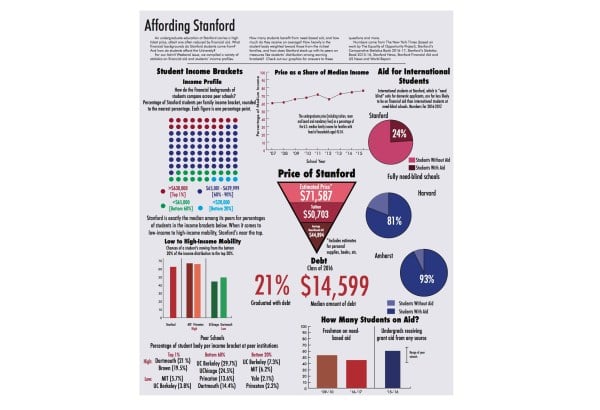
Affording Stanford: What the numbers tell us
Josh Wagner
•
April 27, 2018
Previous
Page
1
Page
2
Page
3
Page
4
Page
5
…
Page
7
Next
Search
Search
News
Academics
Campus Life
Data
Equity Project
Graduate Students
Science & Technology
University
Sports
Fall Sports
Cross Country
Field Hockey
Football
Men’s Soccer
Men’s Water Polo
Women’s Soccer
Women’s Volleyball
Winter Sports
Fencing
Men’s Basketball
Men’s Gymnastics
Men’s Swimming & Diving
Squash
Women’s Basketball
Women’s Gymnastics
Women’s Swimming & Diving
Artistic Swimming
Wrestling
Spring Sports
Baseball
Beach Volleyball
Lacrosse
Men’s Golf
Men’s Rowing
Men’s Tennis
Men’s Volleyball
Sailing
Softball
Track & Field
Women’s Golf
Women’s Lightweight Rowing
Women’s Rowing
Women’s Tennis
Women’s Water Polo
Columnists
Features
Opinions
Columnists
Editorial Board
Letters to the Editor
Letters to the Community
Arts & Life
Culture
Music
Reads
Screen
Grind
Senior Column
Humor
Cartoons
Data
Video
Games
Daily Diminutive
Small puzzles released multiple times a week
Full-Sized Crossword
Classic NYT-style puzzles released intermittently
Stanfordle
Special Editions
Magazine
Third-Party Advertising
Search
News
Academics
Campus Life
Data
Equity Project
Graduate Students
Science & Technology
University
Sports
Fall Sports
Cross Country
Field Hockey
Football
Men’s Soccer
Men’s Water Polo
Women’s Soccer
Women’s Volleyball
Winter Sports
Fencing
Men’s Basketball
Men’s Gymnastics
Men’s Swimming & Diving
Squash
Women’s Basketball
Women’s Gymnastics
Women’s Swimming & Diving
Artistic Swimming
Wrestling
Spring Sports
Baseball
Beach Volleyball
Lacrosse
Men’s Golf
Men’s Rowing
Men’s Tennis
Men’s Volleyball
Sailing
Softball
Track & Field
Women’s Golf
Women’s Lightweight Rowing
Women’s Rowing
Women’s Tennis
Women’s Water Polo
Columnists
Features
Opinions
Columnists
Editorial Board
Letters to the Editor
Letters to the Community
Arts & Life
Culture
Music
Reads
Screen
Grind
Senior Column
Humor
Cartoons
Data
Video
Games
Daily Diminutive
Small puzzles released multiple times a week
Full-Sized Crossword
Classic NYT-style puzzles released intermittently
Stanfordle
Special Editions
Magazine
Third-Party Advertising
The Stanford Daily
Login or create an account
Username or Email Address
*
Password
Remember Me
Register
|
Lost your password?
Username or Email Address
Password
Remember Me
Log In
Lost your password?
|
Register