Search
Search
Remove Ads
Subscribe to Digest
Log in
Faculty Senate
Opinions
Langshaw | Why Stanford must follow Harvard on grade reform
Adam Langshaw
•
June 4
Opinions
Students need an inclusive COLLEGE
Judy Akel
•
May 27
University
Levin highlights University contribution to technology, research at annual Academic Council meeting
Kaleb Gjestson
•
May 22
University
Stanford to begin exam proctoring following pilot program
Emerson Prentice
•
May 20
University
University extends COLLEGE to three quarters, defending liberal arts requirements
Aadi Kucheria
and
Rishi Upadhyay
•
May 14
University
Faculty Senate addresses student-IDF soldier altercation, votes to expand COLLEGE program
Aadi Kucheria
•
May 8
Campus Life
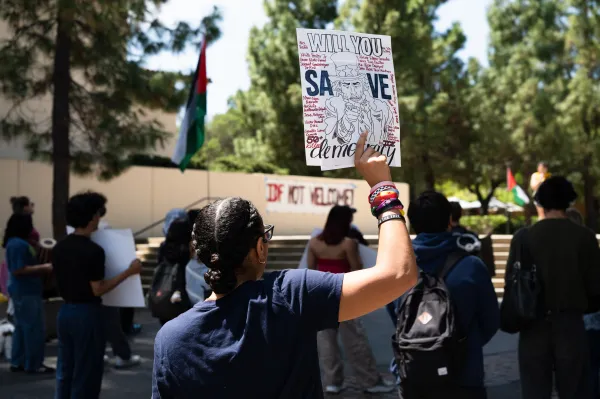
Students protest IDF soldier’s presence on campus
Sofia Williams
•
April 27
News
Faculty Senate debates Flock cameras, honors faculty
Aadi Kucheria
•
April 10
University
Faculty Senate recognizes past members, family weekend
Aadi Kucheria
•
March 5
University
Dean Satz announces reversal of student speaker ban at commencement, FacSen rejects new authorship policy
Mary Zheng
•
Jan. 23
University
Faculty Senate debates student AI use
Naina Mehrotra
•
Nov. 21
University
Faculty Senate debates COLLEGE curriculum, votes to support post-bacc athlete admissions
Mary Zheng
•
Nov. 7
Columnists
Strawser | Inviting DeSantis to speak was easy. True free speech is hard.
Sebastian Strawser
•
Nov. 6
University
Faculty Senate addresses alleged academic espionage, co-ops and gen ed requirements
Emmett Chung
•
May 12, 2025
News
UGS postpones certifying election, hears from co-ops losing houses
Audrey Tomlin
•
May 8, 2025
University
Levin defends absence from anti-Trump letter at Faculty Senate meeting
Sofia Williams
•
April 25, 2025
University
Levin affirms University’s commitment to academic freedom, announces expanded undergraduate class
Sofia Williams
and
Siddharth Bhatia
•
April 11, 2025
Opinions
Strawser | Dear ASSU: Be the leaders the Trump era calls for
Sebastian Strawser
•
March 13, 2025
Opinions
From the Community | I am more than a researcher, but Stanford doesn’t care
From the Community
•
March 3, 2025
University
Martinez calls Stanford a ‘resilient institution’ at Faculty Senate meeting
Maia Pak
•
Feb. 21, 2025
Previous
Page
1
Page
2
Page
3
…
Page
17
Next
Search
Search
News
Academics
Campus Life
Data
Equity Project
Graduate Students
Science & Technology
University
Sports
Fall Sports
Cross Country
Field Hockey
Football
Men’s Soccer
Men’s Water Polo
Women’s Soccer
Women’s Volleyball
Winter Sports
Fencing
Men’s Basketball
Men’s Gymnastics
Men’s Swimming & Diving
Squash
Women’s Basketball
Women’s Gymnastics
Women’s Swimming & Diving
Artistic Swimming
Wrestling
Spring Sports
Baseball
Beach Volleyball
Lacrosse
Men’s Golf
Men’s Rowing
Men’s Tennis
Men’s Volleyball
Sailing
Softball
Track & Field
Women’s Golf
Women’s Lightweight Rowing
Women’s Rowing
Women’s Tennis
Women’s Water Polo
Columnists
Features
Opinions
Columnists
Editorial Board
Letters to the Editor
Letters to the Community
Arts & Life
Culture
Music
Reads
Screen
Grind
Senior Column
Humor
Cartoons
Data
Video
Games
Daily Diminutive
Small puzzles released multiple times a week
Full-Sized Crossword
Classic NYT-style puzzles released intermittently
Stanfordle
Special Editions
Magazine
Third-Party Advertising
Search
News
Academics
Campus Life
Data
Equity Project
Graduate Students
Science & Technology
University
Sports
Fall Sports
Cross Country
Field Hockey
Football
Men’s Soccer
Men’s Water Polo
Women’s Soccer
Women’s Volleyball
Winter Sports
Fencing
Men’s Basketball
Men’s Gymnastics
Men’s Swimming & Diving
Squash
Women’s Basketball
Women’s Gymnastics
Women’s Swimming & Diving
Artistic Swimming
Wrestling
Spring Sports
Baseball
Beach Volleyball
Lacrosse
Men’s Golf
Men’s Rowing
Men’s Tennis
Men’s Volleyball
Sailing
Softball
Track & Field
Women’s Golf
Women’s Lightweight Rowing
Women’s Rowing
Women’s Tennis
Women’s Water Polo
Columnists
Features
Opinions
Columnists
Editorial Board
Letters to the Editor
Letters to the Community
Arts & Life
Culture
Music
Reads
Screen
Grind
Senior Column
Humor
Cartoons
Data
Video
Games
Daily Diminutive
Small puzzles released multiple times a week
Full-Sized Crossword
Classic NYT-style puzzles released intermittently
Stanfordle
Special Editions
Magazine
Third-Party Advertising
The Stanford Daily
Login or create an account
Username or Email Address
*
Password
Remember Me
Register
|
Lost your password?
Username or Email Address
Password
Remember Me
Log In
Lost your password?
|
Register