Search
Search
Remove Ads
Subscribe to Digest
Log in
Congress
Campus Life
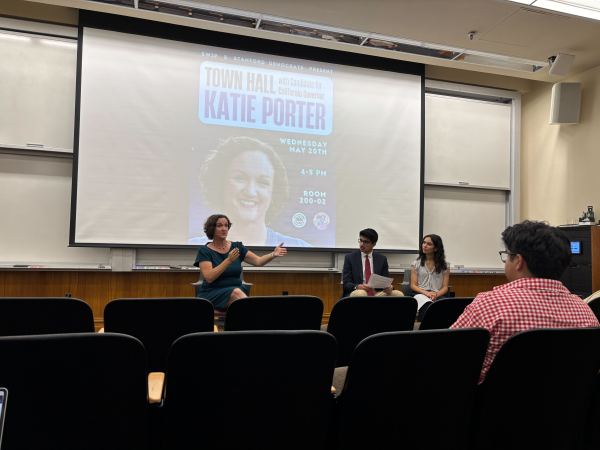
‘Housing is my top priority’: Gubernatorial candidate Katie Porter visits campus
Dilan Gohill
•
May 22
News
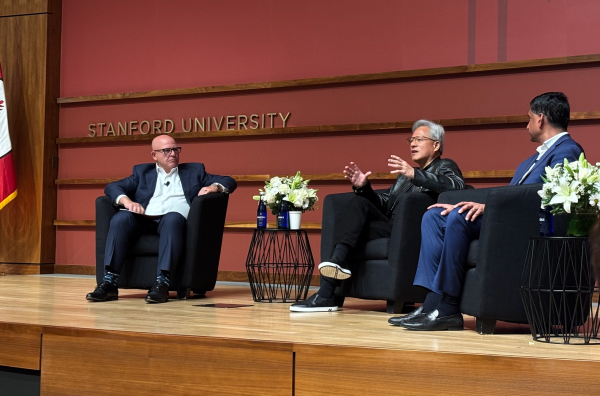
NVIDIA Founder Jensen Huang and Congressman Ro Khanna examine role of AI in the U.S.
Eva Wanek
•
April 10
From the Community
From the Community | Anthropic v. DoW is a wakeup call: Stanford must lead on AI and democracy
From the Community
•
March 10
Opinions
Congress boosted Type 1 diabetes research. Who will actually benefit?
Sarah Marriott
•
Feb. 24
University
Sanders, Khanna denounce role of AI in wealth inequality
Sofia Williams
and
Alula Alderson
•
Feb. 23
Opinions
From the Community | On practicing bipartisanship and cross-cultural politics
Chuck Ludlam
•
Feb. 19
Campus Life
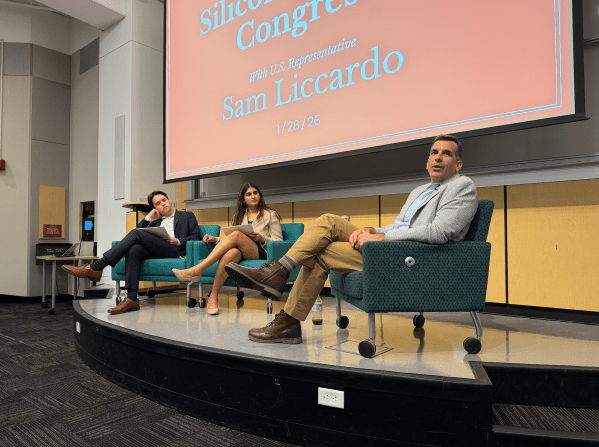
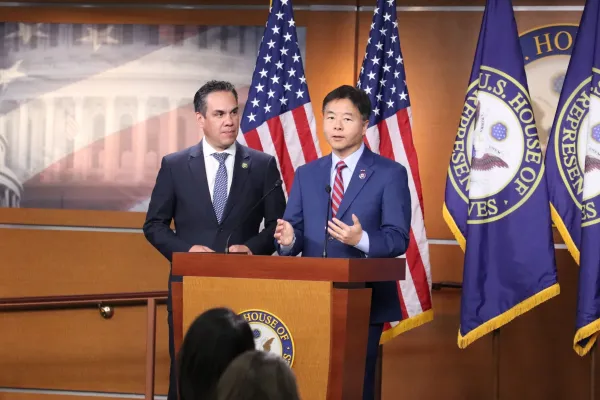
Rep. Sam Liccardo advocates AI regulation, clean energy
Torin Young
•
Jan. 29
Local
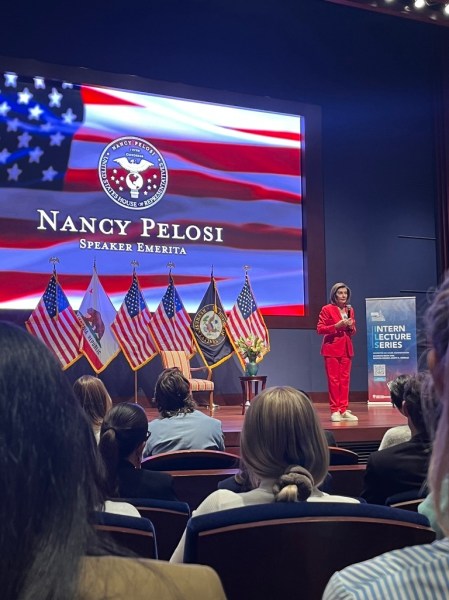
Stanford reacts to Nancy Pelosi’s retirement from Congress
Emmett Chung
•
Nov. 18
Campus Life
Representative Julia Brownley introduces ‘Katie Meyer’s Law’ as federal legislation
Charlotte Burks
•
Sept. 29
Opinions
I secretly wished the TikTok ban had succeeded. Now, I realize the app wasn’t the issue
Zachary Gottlieb
•
Feb. 6, 2025
Local
Democrats Low, Liccardo vie for California’s 16th congressional district
Austin Park
•
Oct. 31, 2024
The Grind
The fight for the American spirit: My time working on Capitol Hill
Anthony Martinez Rosales
•
Oct. 29, 2024
Opinions
From the Community | Instead of attacking critics of Israel, explain why we shouldn’t
From the Community
•
March 13, 2024
News
Ph.D. student testifies before Congress on antisemitism at Stanford
George Porteous
and
Anna Yang
•
March 7, 2024
News
Democrats Liccardo and Simitian lead CA-16 primary
Oriana Riley
and
Caroline Chen
•
March 6, 2024
News
‘A critical need’: Former San Jose Mayor talks congressional bid
George Porteous
•
Feb. 19, 2024
News
Farm to (seat at) table: Alumni fondly trace political roots to Stanford
Nika Farokhzad
and
Sophia Qin
•
Feb. 8, 2024
Local
‘A new generation of leadership’: Assemblymember Evan Low runs for Congress
George Porteous
•
Feb. 5, 2024
Local
Former Marine Peter Dixon: ‘Democracy is on the line here’
George Porteous
•
Jan. 26, 2024
University
Cardinal for Congress: Julie Lythcott-Haims ’89 builds unlikely coalitions
George Porteous
•
Jan. 23, 2024
Previous
Page
1
Page
2
Page
3
…
Page
5
Next
Search
Search
News
Academics
Campus Life
Data
Equity Project
Graduate Students
Science & Technology
University
Sports
Fall Sports
Cross Country
Field Hockey
Football
Men’s Soccer
Men’s Water Polo
Women’s Soccer
Women’s Volleyball
Winter Sports
Fencing
Men’s Basketball
Men’s Gymnastics
Men’s Swimming & Diving
Squash
Women’s Basketball
Women’s Gymnastics
Women’s Swimming & Diving
Artistic Swimming
Wrestling
Spring Sports
Baseball
Beach Volleyball
Lacrosse
Men’s Golf
Men’s Rowing
Men’s Tennis
Men’s Volleyball
Sailing
Softball
Track & Field
Women’s Golf
Women’s Lightweight Rowing
Women’s Rowing
Women’s Tennis
Women’s Water Polo
Columnists
Features
Opinions
Columnists
Editorial Board
Letters to the Editor
Letters to the Community
Arts & Life
Culture
Music
Reads
Screen
Grind
Senior Column
Humor
Cartoons
Data
Video
Games
Daily Diminutive
Small puzzles released multiple times a week
Full-Sized Crossword
Classic NYT-style puzzles released intermittently
Stanfordle
Special Editions
Magazine
Third-Party Advertising
Search
News
Academics
Campus Life
Data
Equity Project
Graduate Students
Science & Technology
University
Sports
Fall Sports
Cross Country
Field Hockey
Football
Men’s Soccer
Men’s Water Polo
Women’s Soccer
Women’s Volleyball
Winter Sports
Fencing
Men’s Basketball
Men’s Gymnastics
Men’s Swimming & Diving
Squash
Women’s Basketball
Women’s Gymnastics
Women’s Swimming & Diving
Artistic Swimming
Wrestling
Spring Sports
Baseball
Beach Volleyball
Lacrosse
Men’s Golf
Men’s Rowing
Men’s Tennis
Men’s Volleyball
Sailing
Softball
Track & Field
Women’s Golf
Women’s Lightweight Rowing
Women’s Rowing
Women’s Tennis
Women’s Water Polo
Columnists
Features
Opinions
Columnists
Editorial Board
Letters to the Editor
Letters to the Community
Arts & Life
Culture
Music
Reads
Screen
Grind
Senior Column
Humor
Cartoons
Data
Video
Games
Daily Diminutive
Small puzzles released multiple times a week
Full-Sized Crossword
Classic NYT-style puzzles released intermittently
Stanfordle
Special Editions
Magazine
Third-Party Advertising
The Stanford Daily
Login or create an account
Username or Email Address
*
Password
Remember Me
Register
|
Lost your password?
Username or Email Address
Password
Remember Me
Log In
Lost your password?
|
Register