Faculty view fiscal cliff with apprehension
With the end of 2012 rapidly approaching, efforts to avert the fiscal cliff — a combination of automatic spending cuts and tax hikes set to… Continue Reading »
A new email phishing attack has recently targeted members of the Stanford community, according to University administrators and residential computer consultants (RCCs).
The Faculty Senate heard a report on graduate studies at its Thursday meeting, in a session notable primarily — at little more than 15 minutes in duration — for its unusual brevity.
Even as Stanford continues to bounce back strongly from the impact of the 2008 recession, renewed uncertainty about potential cuts in federal spending may prompt a more serious challenge to the University’s ability to fund faculty and students in the years ahead.
Students traveling home for winter break next month will be offered the use of a reformed ASSU shuttle service program, in an effort to make the service more accessible to students while limiting the losses the program has sustained in previous years.
As undergraduates, Jeremy Keeshin ’12 M.S. ’13 and Zach Galant ’12 M.S. ’13 taught introductory computer science to their peers as teaching assistants in the perpetually overenrolled CS106A. But after graduating, they decided to take their teaching to a younger group: high school students.
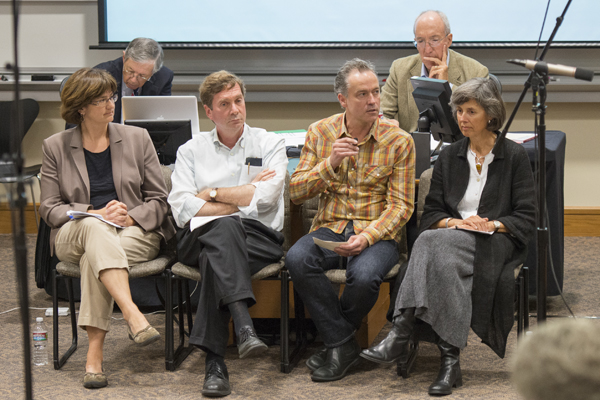
The Faculty Senate heard a report at its Nov. 8 meeting about how the University is working to implement the changes to undergraduate education suggested by the Study of Undergraduate Education at Stanford (SUES), which was approved by the Senate in May.
“When you try and make change happen, that’s not easy,” conceded Steve Hilton, currently on sabbatical from his position as senior advisor for British Prime Minister David Cameron. “There are vested interests, people have different views.” Hilton, who currently serves as a visiting fellow at the Hoover Institution and a visiting scholar at the Freeman Spogli Institute for International Studies, framed the decision to move across the Atlantic as personal rather than professional, in order to accommodate his wife Rachel Whetstone, a senior executive at Google.